
Announcements, Events
From Industry Needs to Real-world Deployment: Advancing Singapore’s Industrial Decarbonisation
27 October 2026
The inaugural Singapore Industry Decarbonisation Forum (SIDF) on 23 October 2026 brought together over 300 participants from facility owners, technology providers, investors, start-ups, and the research community to explore how innovation and collaboration can accelerate industrial decarbonisation in Singapore.
Jointly organised by Economic Development Board (EDB), the sector lead for industrial decarbonisation, and the Advanced Energy and Decarbonisation Office (AEDO), a national platform hosted by the Agency for Science, Technology and Research (A*STAR), the Forum brought together industry with researchers, technology developers and ecosystem partners to advance solutions for Singapore’s industrial decarbonisation needs, including in areas such as carbon capture and utilisation and low-carbon hydrogen and its derivatives.
The Forum also saw the launch of a $143 million Industry Decarbonisation Funding Initiative (FI) to accelerate the development and commercialisation of low-carbon technologies for industry. The FI forms part of Singapore’s $800 million Research, Innovation and Enterprise (RIE) 2030 Decarbonisation Grand Challenge (DGC) (opens in new tab), which supports promising technologies across the innovation journey, from R&D to translation, scale-up and deployment.
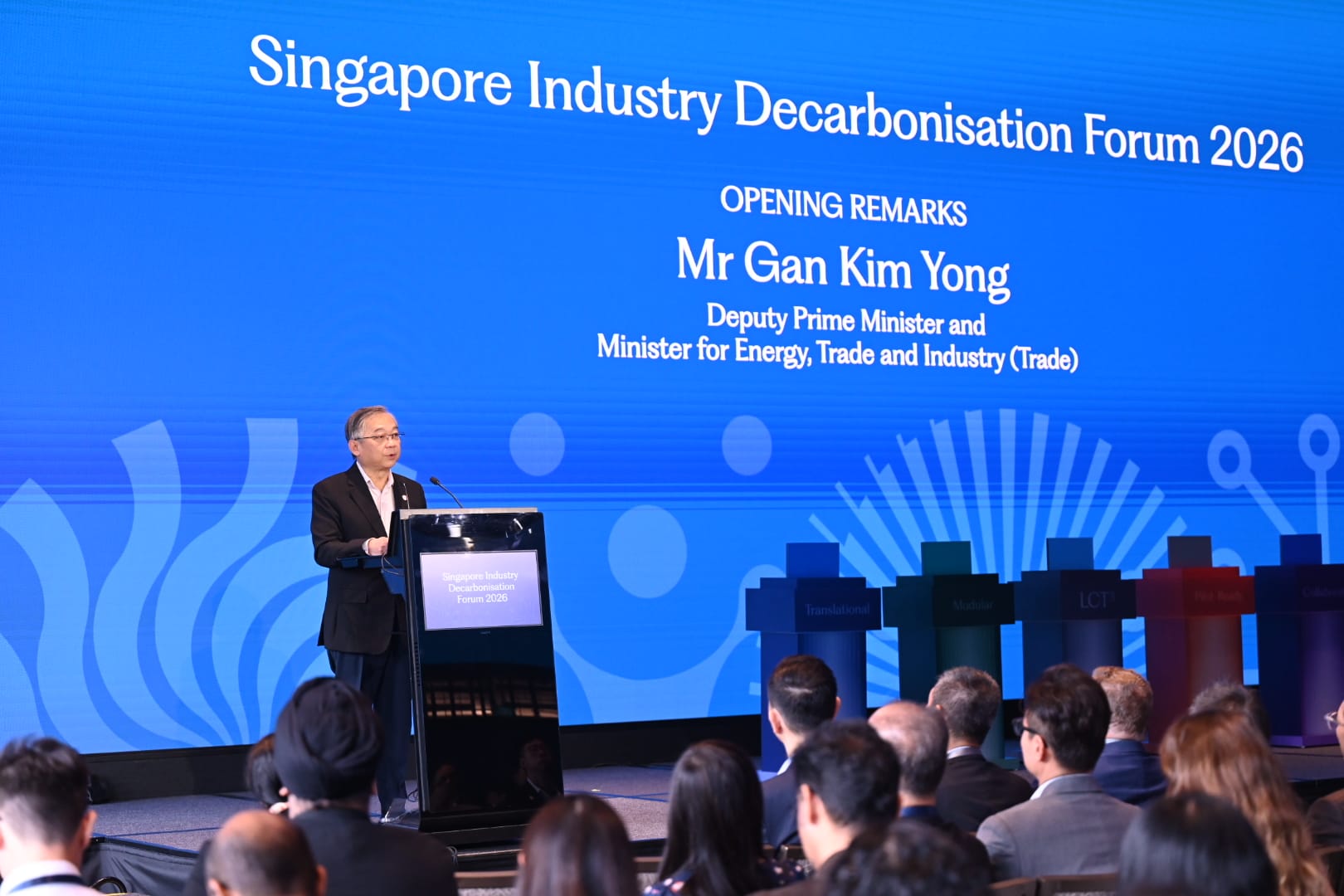
Over 300 participants from industry, technology providers, investors, startups and the research community came together at the inaugural SIDF.
Putting industry in the DRIVE-r’s seat
A key announcement at SIDF was the launch of Decarbonisation Research for Industry, Ventures, and Enterprise (DRIVE), a new scheme under the DGC that gives companies a direct role in shaping decarbonisation R&D. Up to $100 million will be set aside for DRIVE as part of the $143 million Industry Decarbonisation Funding Initiative.
Under DRIVE, companies, including start-ups and technology providers, can initiate and design R&D projects in partnership with Singapore’s public research institutions to address industry decarbonisation challenges. With more active involvement from companies in the R&D process, DRIVE aims to increase the commercialisation and deployment potential of technologies to support industrial decarbonisation. The government will co-fund up to 75% of qualifying project costs and applications are open as of 23 October 2026.
DRIVE adds to a suite of programmes and capabilities supported by AEDO across the decarbonisation innovation journey, from R&D to scale-up, test-bedding and deployment. These include the Low-Carbon Technology Translational Testbed (LCT³) (opens in new tab) and Singapore Pilots for Energy & Enterprise Decarbonisation (SPEED).
Singapore is also bringing climate and clean-energy investors to strengthen pathways from research to commercialisation. New partnerships and collaborations between EDB, AEDO and Main Sequence Ventures, Extantia and Rocky Mountain Institute were formalised at SIDF.
Together with existing partners, Temasek, Energy Impact Partners, Breakthrough Energy and SG Growth Capital, these collaborations will bring global perspectives on emerging technologies and industry needs to inform Singapore’s R&D funding priorities while connecting relevant companies and technologies with Singapore’s decarbonisation ecosystem and initiatives.
Proving and scaling solutions with industry
Developing promising technologies is only part of the journey. They also need to demonstrate that they can scale and perform under real-world industrial conditions.
At SIDF, five projects were announced to receive follow-on funding under the $65 million Low Carbon Energy Research (LCER) Scale-up Grant Call (SUGC). These projects had demonstrated promising results in an earlier phase of funding and will be resourced to scale-up their capacities by between 5 – 100 times of where they left off. These include a carbon capture technology co-developed by the National University of Singapore (NUS) that will be piloted at PowerSeraya’s Combined Cycle Gas Turbine facility, and a carbon mineralisation technology by A*STAR Institute of Sustainability for Chemicals, Energy and Environment (ISCE²) and Cora Environment that will be scaled up and piloted at Cora Environment’s energy-from-waste plant.
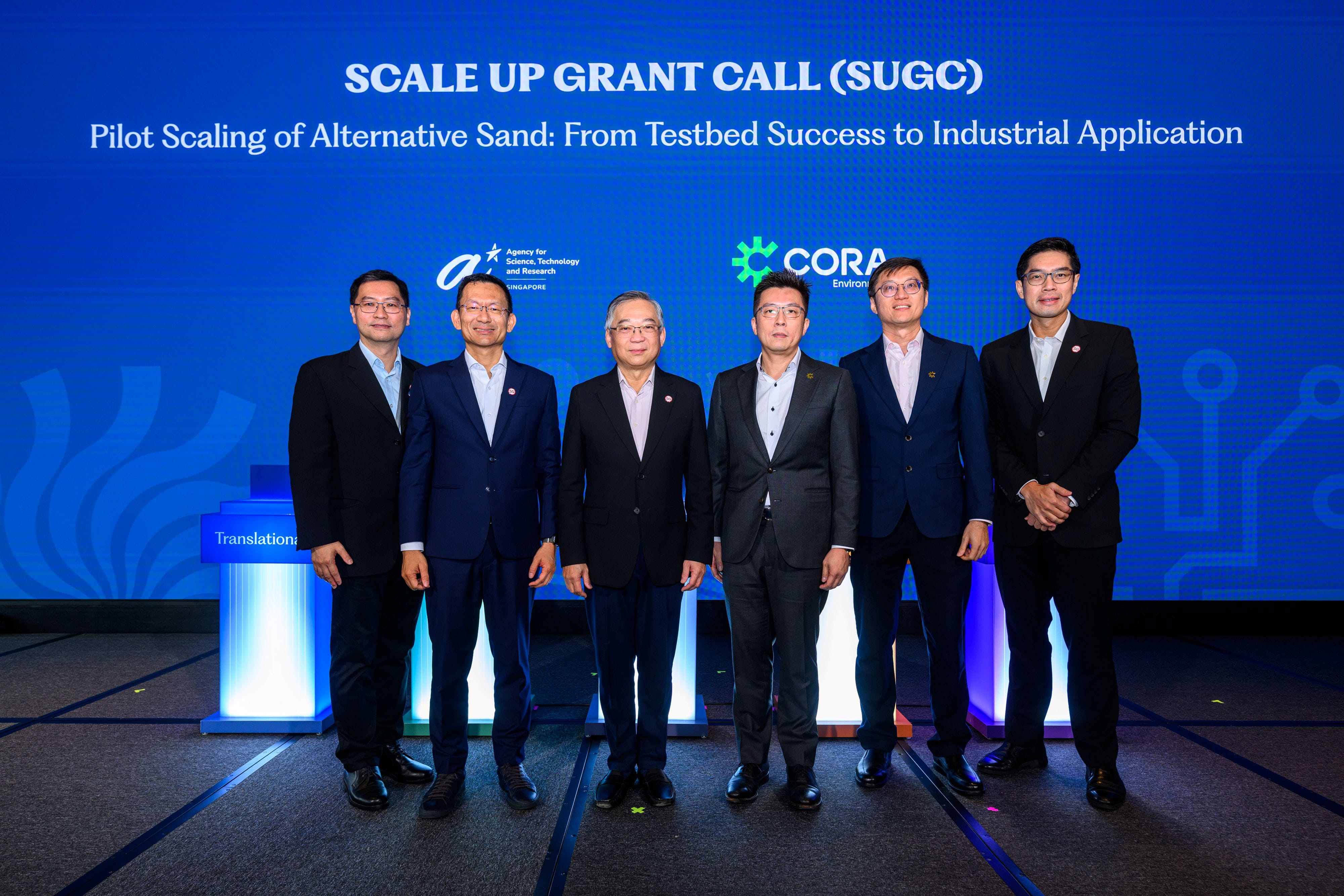
Partnerships across industry, research, technology and investment can help accelerate promising decarbonisation solutions towards deployment.
The Forum also marked the groundbreaking of the S$62 million LCT³ (opens in new tab) on Jurong Island, hosted at A*STAR ISCE². The national test-bedding platform will provide modularised shared facilities for companies and researchers to test and scale technologies.
Its first three industry users, IHI Corporation, Amogy and Metha8, will work with A*STAR on technology pathways spanning carbon dioxide conversion into sustainable aviation fuel, hydrogen production from ammonia, and an integrated methanol-to-power system.
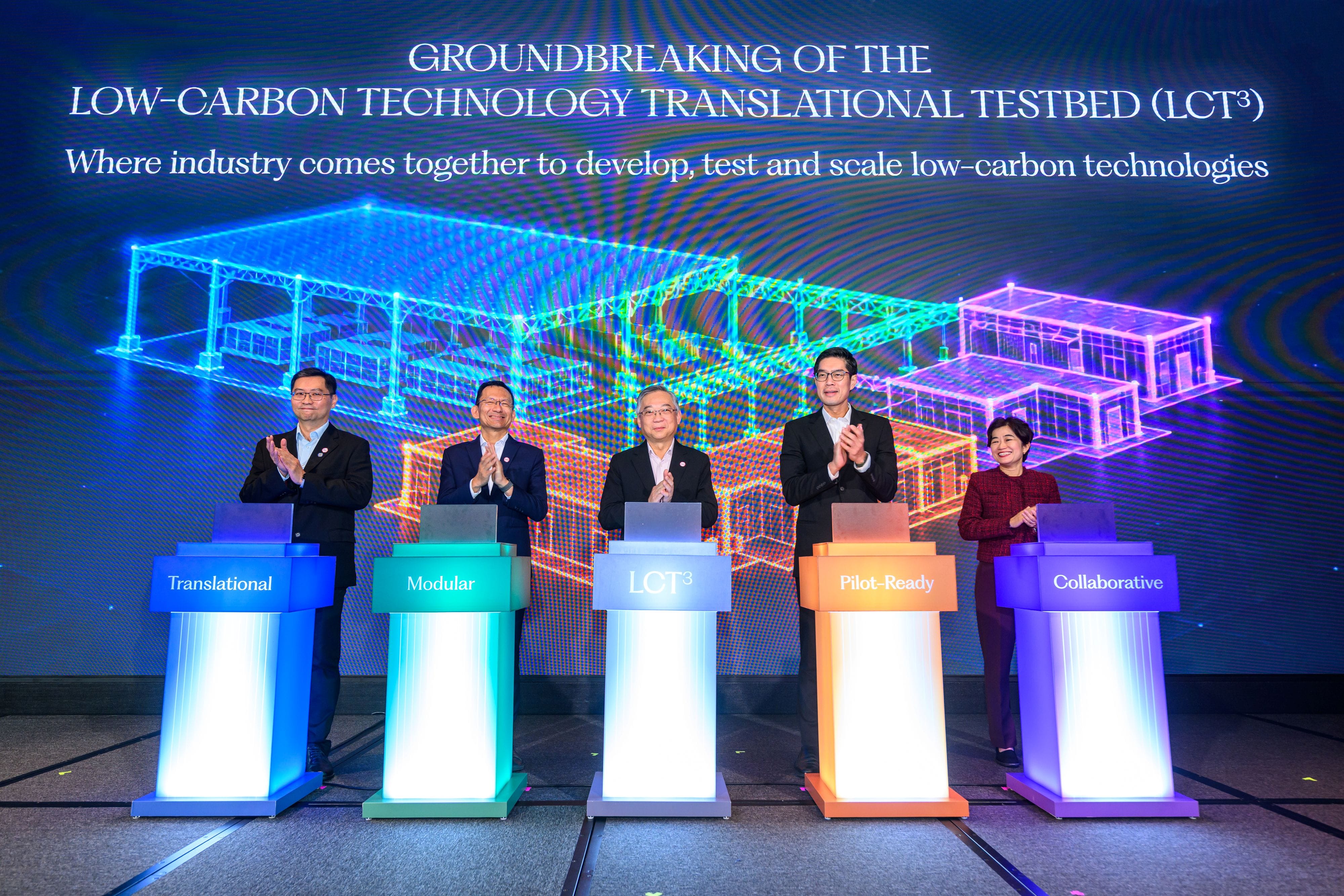
The groundbreaking of the $62 million LCT³ marked a key milestone in developing shared infrastructure for companies and researchers to test and scale low-carbon technologies under industry-relevant conditions.
Bringing the decarbonisation ecosystem together
Beyond the announcements, SIDF gave participants opportunities to connect directly with Singapore’s research and innovation ecosystem and explore the capabilities supporting industrial decarbonisation.
The booth exhibition showcased how Singapore is bringing together research, industry, infrastructure to advance decarbonisation technologies towards real-world application. Through the projects from three complementary technology pathways (carbon capture, carbon utilisation, and hydrogen and its derivatives), the showcase highlighted the research capabilities of our Research Institutions (RIs) and Institute of Higher Learnings (IHLs), key test-bedding facilities and private-public partnerships for technology commercialisation, encouraging participants to explore potential collaborations and plug into Singapore’s Research, Development & Deployment (RD&D) ecosystem.
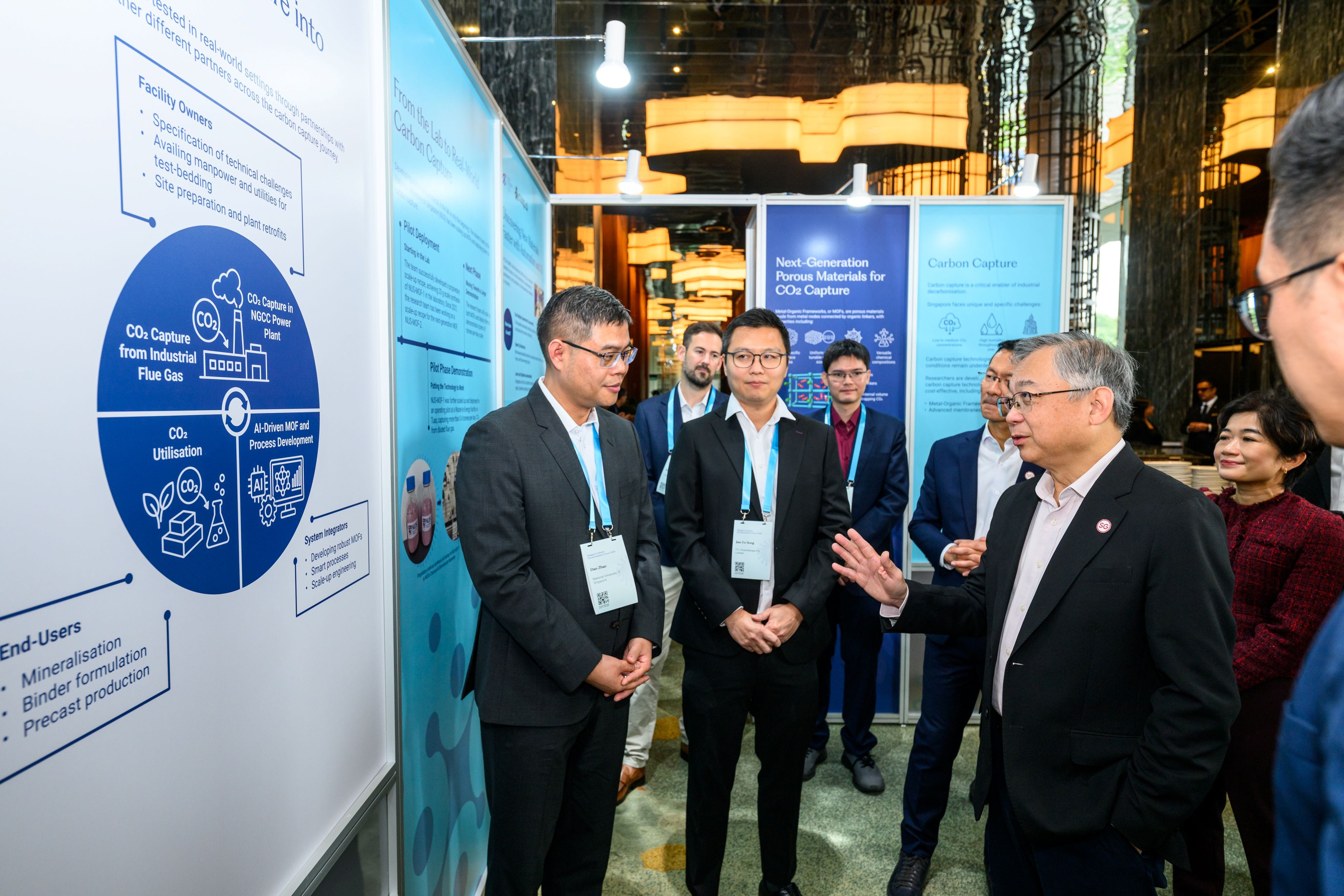
Participants explored research capabilities and emerging technologies addressing industrial decarbonisation challenges.
Complementing the Forum, participants visited NUS, Jurong Island, and A*STAR ISCE² for a closer look at Singapore’s decarbonisation research capabilities and facilities.
At NUS, participants explored research spanning lab-scale carbon capture materials, such as Metal-Organics Frameworks (MOFs) and membranes, electrochemical conversion of carbon dioxide to chemicals, carbon storage and hydrogen generation technologies, as well as how promising research can progress towards larger-scale validation and demonstration. This includes two projects supported under the SUGC: Prof. Zhao Dan’s carbon capture technology using advanced porous materials, which is being scaled up for a 2-tonne-per-day pilot, and Prof. Sibudjing Kawi’s work to scale up methane pyrolysis for the production of hydrogen and value-added carbon nanotubes.
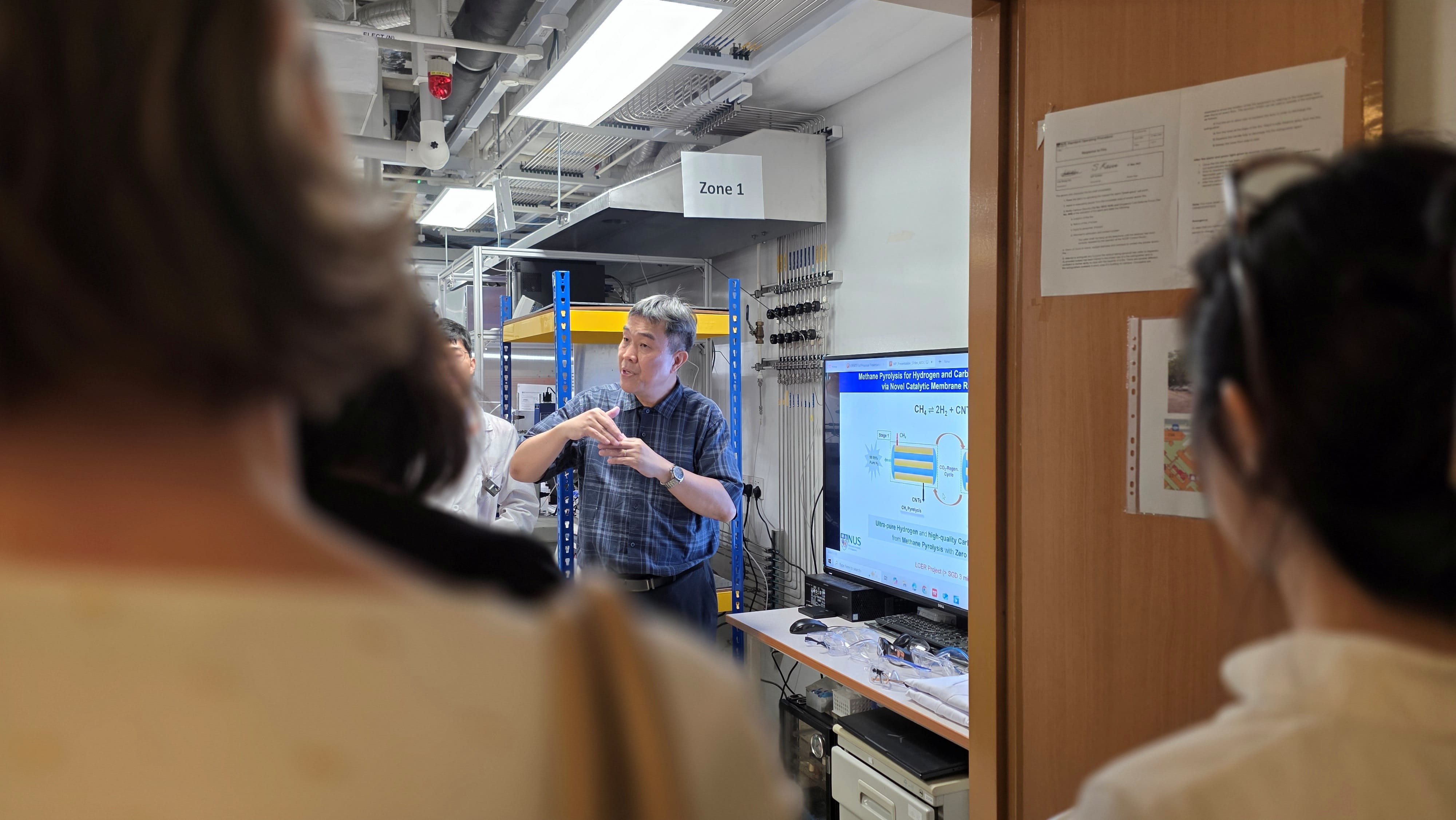
Prof. Sibudjing Kawi showcasing the lab facilities to the participants at NUS.
At A*STAR ISCE², participants visited capabilities spanning technology development, testing and scale-up, including the Accelerated Catalyst Development Platform (ACDP), carbon dioxide mineralisation facilities and the Ammonia Safety Chamber, illustrating the infrastructure available in Singapore to support low-carbon technologies as they move closer to industrial application.
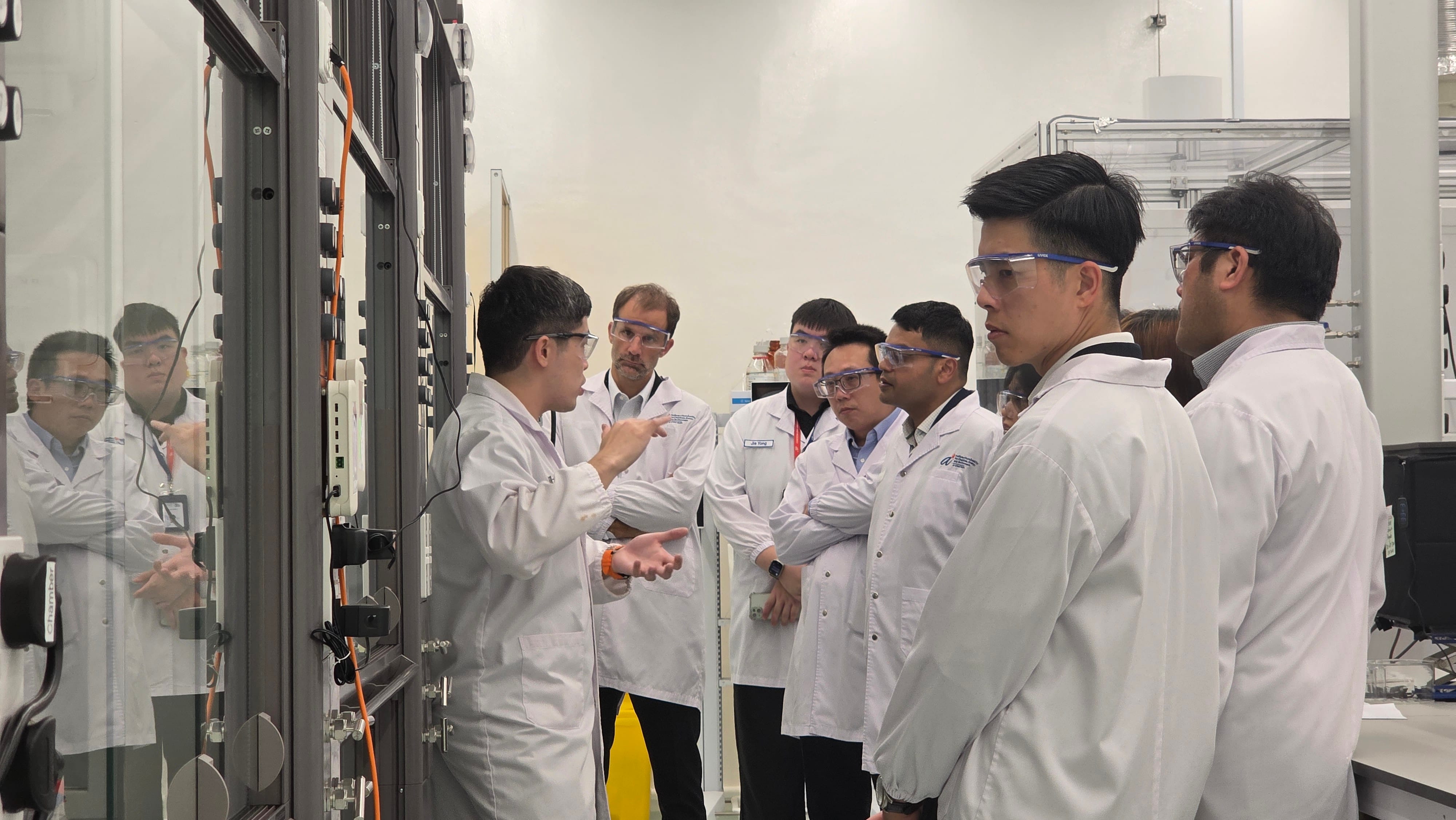
A*STAR scientist showcasing the latest Artificial intelligence Xccleration Lab at ISCE2.
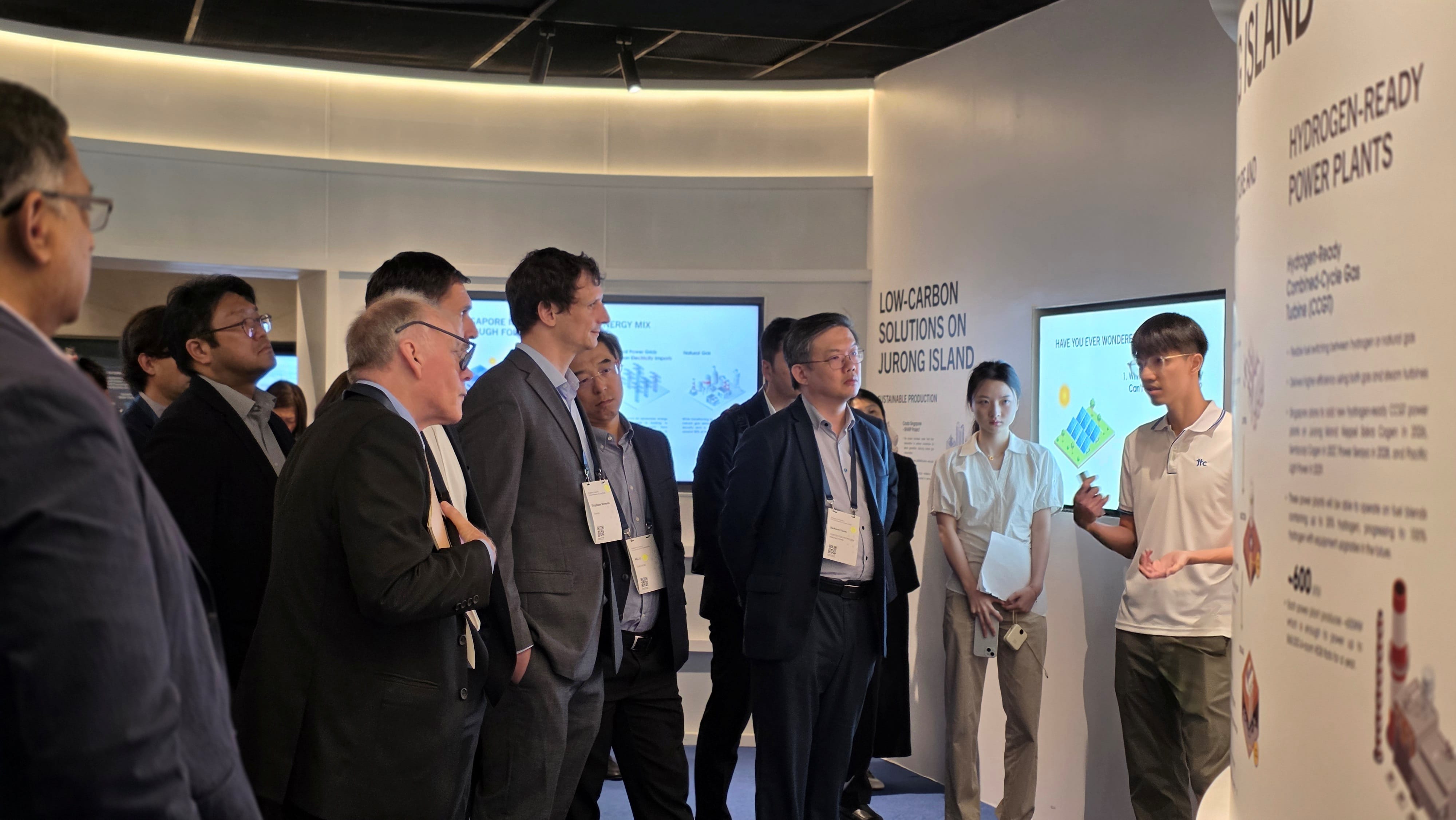
JTC sharing an overview of Jurong Island and transition towards low-carbon solutions.
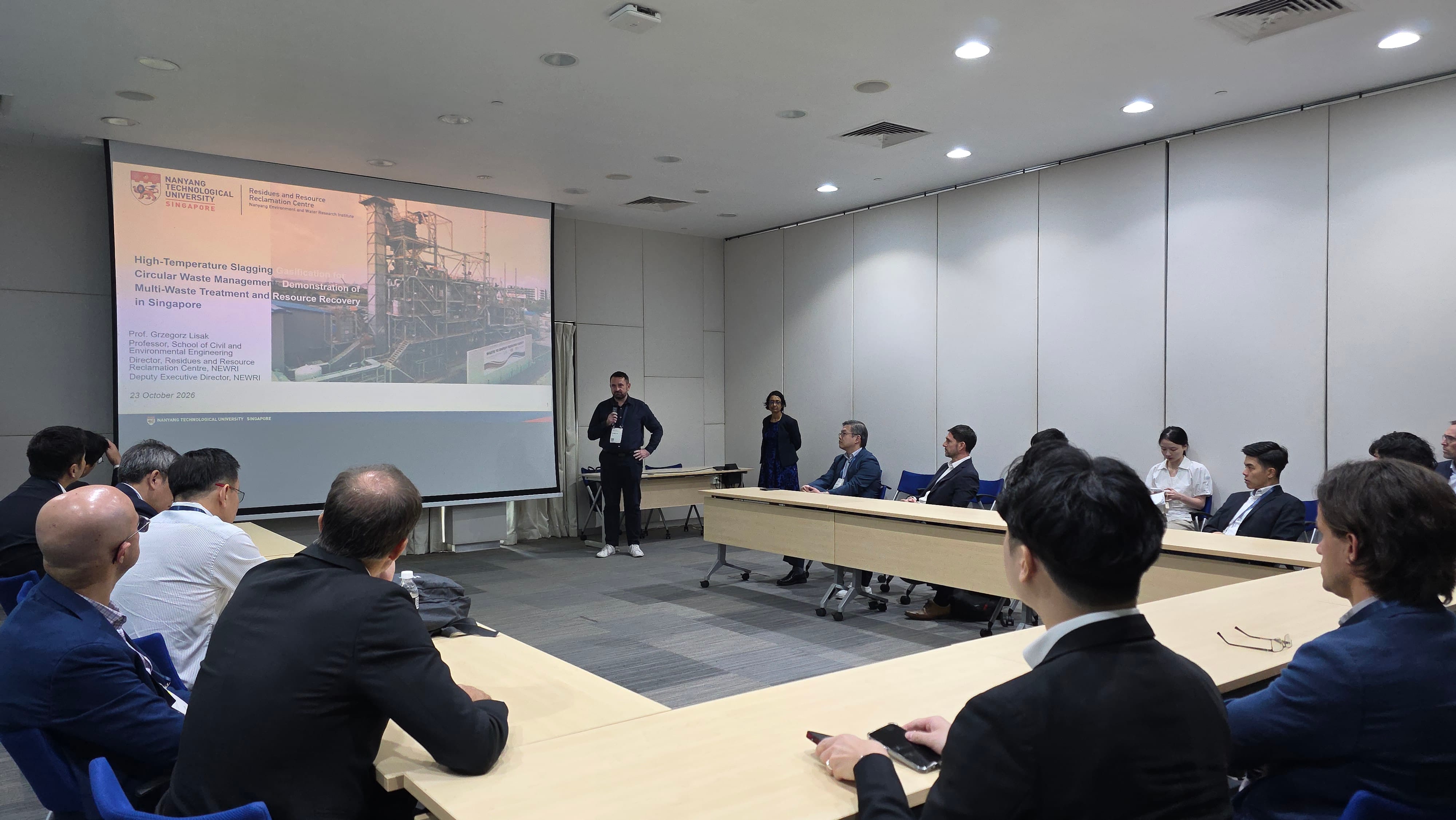
Prof. Lisak providing an overview of the first of its kind Waste-to-Energy Research Facility by the Nanyang Technological University (NTU).
The transition to a low-carbon future will require collaboration across the ecosystem. Through the DGC, AEDO will continue to connect industry challenges with Singapore’s research capabilities and support promising technologies as they progress from R&D towards scale-up, test-bedding and deployment.